THE SIX PROCESSES
The six processes of a system that sells
Sales do not fall from the sky. The work that carries value all the way to the customer has to be connected by the company as a whole.
The six processes are not department names, and they are not a sequence every buyer must pass through. They are a map for examining your company’s core and the value customers seek, the work on the ground and the handoffs between people. Taking assumptions about the market and the product into account as well, we assess where to begin.
Define
What value can your company provide? Whose pain, and what kind of pain, does it answer?
Confirm where your company’s core overlaps with the customer’s Pain, Need and Want, and make that the standard for who receives what in every other process.
Attract
Build the routes through which prospects come in. A nose for going out and finding them matters too. But if that depends on one person, prospects stop coming the moment that person leaves.
And today, buyers research before they meet you. They search, and they ask AI. Fall behind this change and you drop out before you are even on the shortlist.
Nurture
Turn a point of contact into real consideration.
Can you keep communicating value as a company, rather than relying on personal chemistry?
Support decisions
Help the buyer decide whether to buy. Has the information they need to judge actually reached them?
And do they understand, both quantitatively and qualitatively, what value lies beyond that decision?
Expand value
After adoption, what changed for the customer? Check how it is used and what it achieved, and where needed, bring value to other uses or departments as well. Do not stop at a single sale.
Learn and reinvest
Learn from the customer’s outcomes and from what did not work, and reinvest the payment received into the next round of value creation. Share what was learned inside the company, communicate results externally only with permission, and invest profit in people, technology and systems. Decide who carries that cycle, and how.
Books & Programs
A system that sells can be designed.
We offer books and programs that bring these six processes down into a real workplace.
The books, supplementary materials and program below are available in Japanese only.
Books
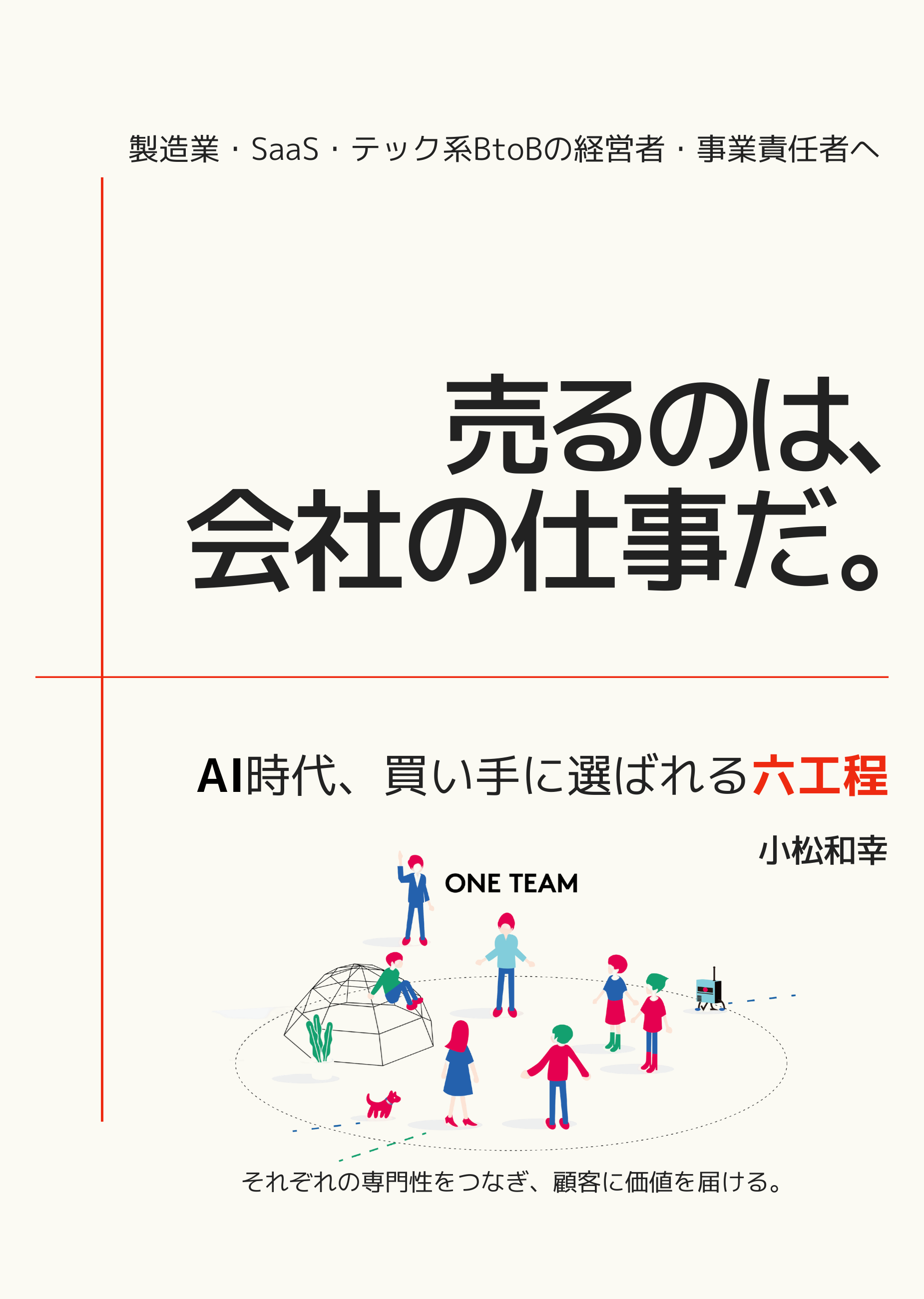
売るのは、会社の仕事だ。
Selling Is the Company’s Job: Six Processes for Being Chosen by Buyers in the AI Era (English translation of the Japanese title)
Today, buyers research on the web, consult AI and compare candidates before they ever meet a salesperson. That is exactly why sales cannot be left to the effort of the sales team alone; the company has to respond together.
This does not mean everyone becomes a salesperson. It asks whether each specialty — engineering, development, production, marketing and sales — is connected as one piece of work that delivers value to the customer.
Faced with field records and customers’ own words, how did Komatsu’s reading of the situation change? From that process, the book helps you think about what your company should examine first.
Buy on Amazon Japan (Japanese)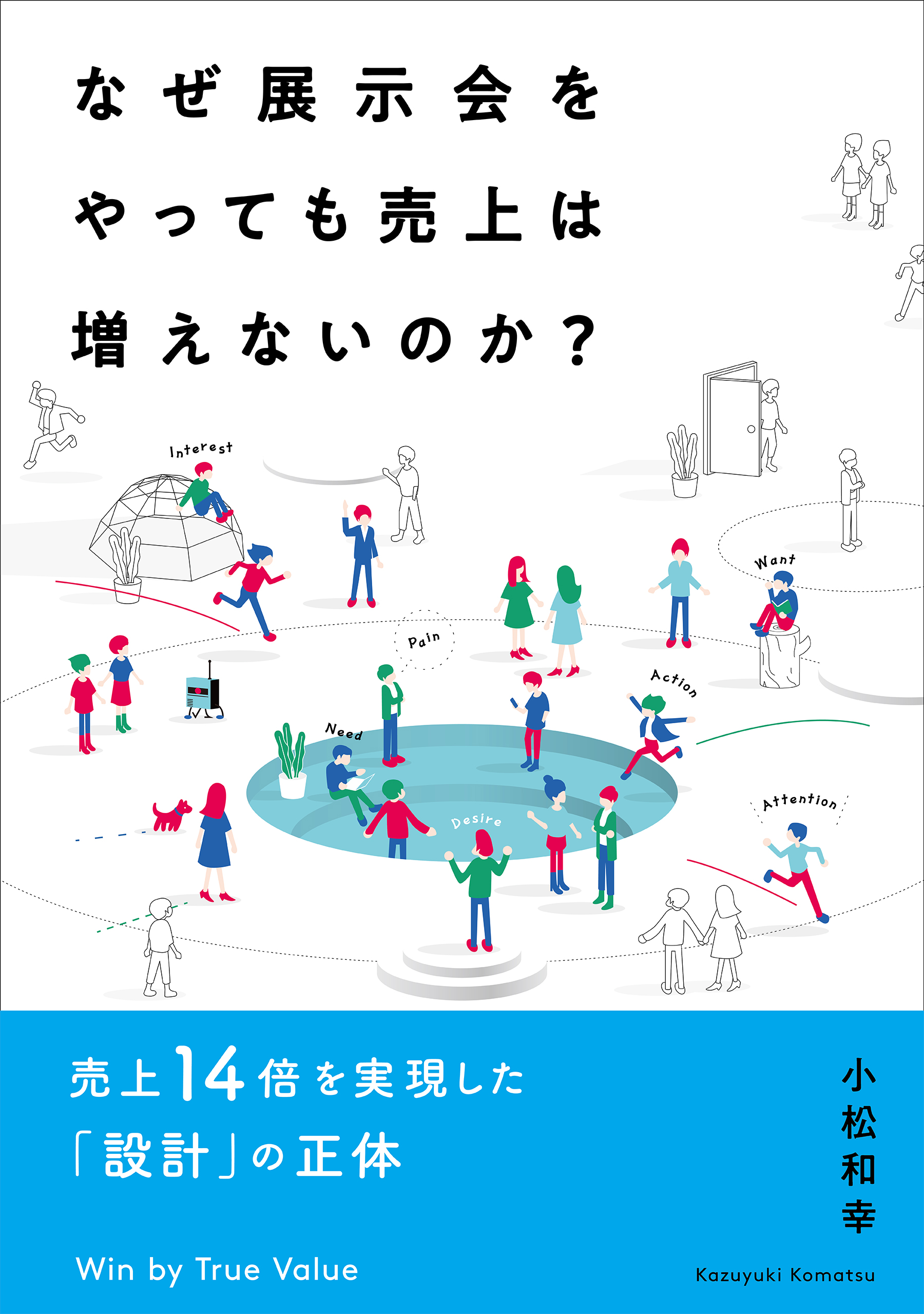
なぜ展示会をやっても、売上は増えないのか?
Why Don’t Trade Shows Increase Sales? — subtitle: “The ‘design’ behind a 14-fold increase in sales” (English translation of the Japanese title)
The book takes trade shows as its subject, but what it really deals with is the six processes themselves: whose pain to answer; attracting and nurturing prospects before the show; sorting leads into S, A, B and C and running two funnels; and, finally, the organization and individual careers.
Buy on Amazon (Japanese)Programs
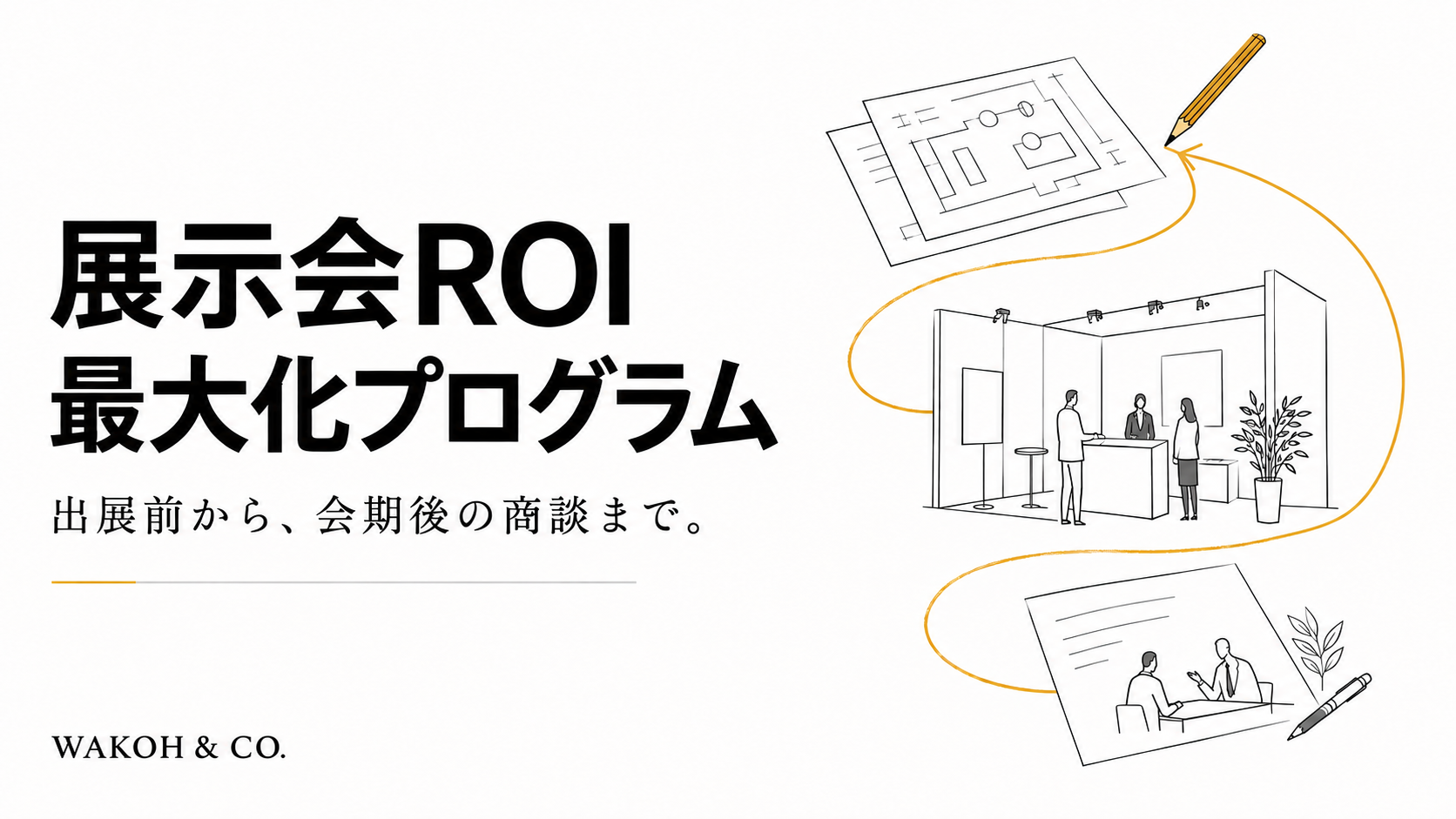
Trade Show ROI Maximization Program (Japanese)
A budget of tens of millions of yen should not be spent on a mere “festival.”
A package of practical formats for redesigning trade shows as business investments.
Individual and corporate licenses are available.